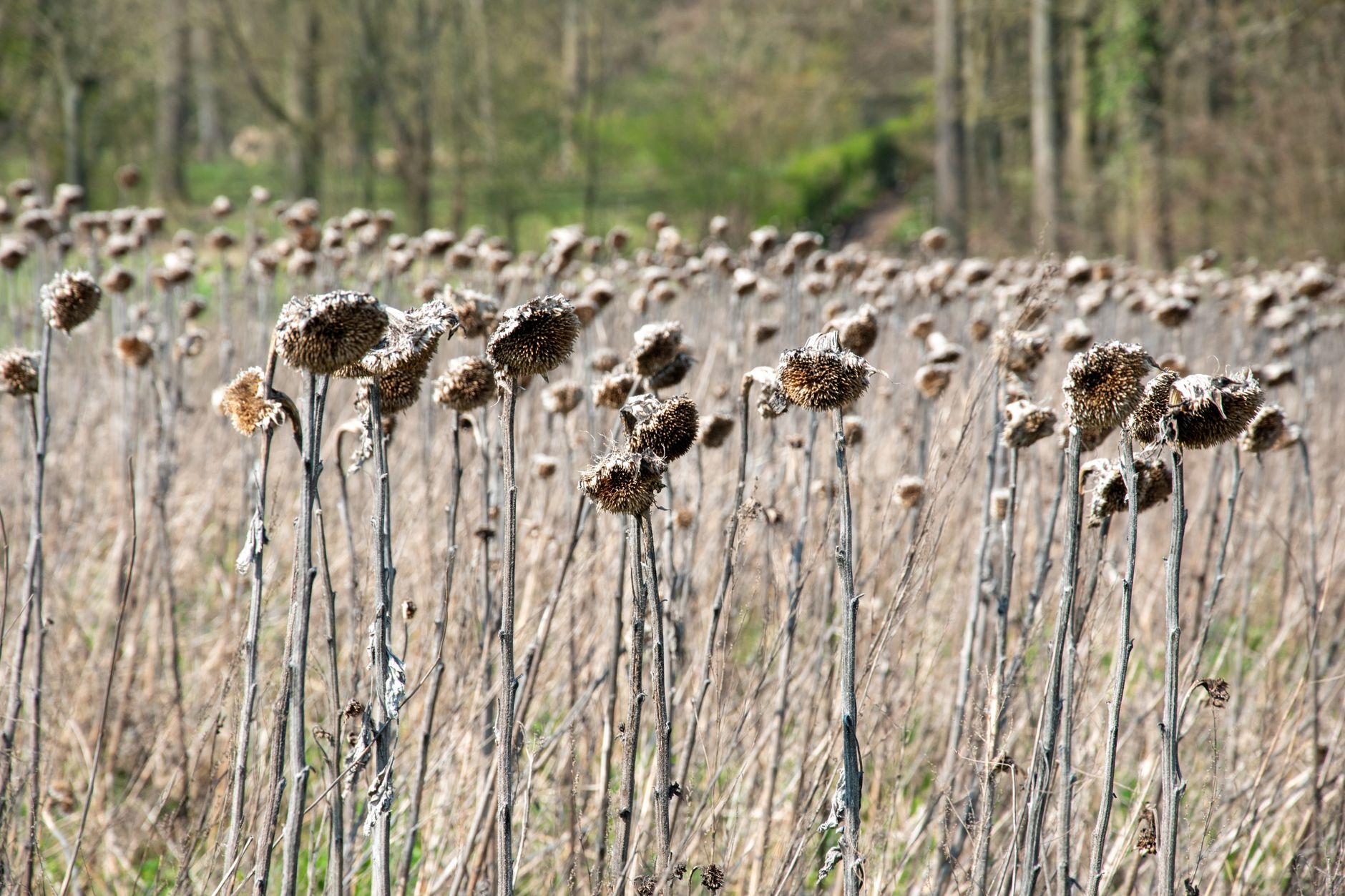
Dryland Sunflower Farming in Tharaka Nithi and Embu
Tharaka Nithi and Embu counties sit in landscapes that many people assume are too dry for profitable crop farming. That assumption costs farmers real money, because sunflowers are genuinely built for exactly these conditions. With the right variety, the right timing, and a guaranteed buyer waiting at the end of the season, dryland sunflower farming in Kenya can be one of the most reliable income sources a smallholder farmer in these counties has ever tried.
Dryland Sunflower Farming Kenya: Why Sunflowers Thrive in Dryland Areas
Sunflowers are among the most water-efficient crops a Kenyan farmer can grow, requiring significantly less rainfall than maize or beans to reach a productive harvest. Where maize struggles below 600 mm of annual rainfall, a well-managed sunflower field can perform respectably on considerably less. That characteristic makes Tharaka Nithi and Embu, with their irregular and often short rainfall seasons, a natural fit rather than a limitation. Farmers who have spent years watching maize fail in dry years often discover that sunflowers shrug off the same conditions. The crop simply does not punish dry spells the way other staples do, which changes the risk calculation completely.
The sunflower plant's deep taproot is one of the main reasons it survives when surface soils dry out. While maize roots sit mostly in the top 30 cm of soil, sunflower roots can push 1.5 to 2 metres deep, reaching moisture layers that shallower crops cannot access. In Tharaka Nithi's stony loam soils and Embu's red volcanic soils, this root architecture gives the plant a genuine survival advantage during mid-season dry spells. Farmers who understand this stop worrying about every dry week and manage the crop with more confidence. The plant draws from a reservoir that is invisible but reliable.
Pest and disease pressure also tends to be lower in drier farming environments, which matters for input costs and crop losses. High humidity is the breeding ground for fungal diseases like Alternaria leaf spot, which can devastate sunflower fields in wetter counties. In Tharaka Nithi and Embu, that threat is reduced simply because the air and soil stay drier for longer stretches. Insect pest populations that thrive in moist microenvironments are likewise less aggressive in these zones. Farmers in dryland areas often spend less on fungicides and corrective sprays, keeping more of their revenue as actual profit.
Choosing the Right Certified Sunflower Varieties
Not every sunflower variety performs equally under dryland stress, and variety selection is one of the most important decisions a farmer makes before the season begins. Drought-tolerant varieties like Sunfola and Suncrop have been tested specifically for performance in low-rainfall environments and consistently deliver reasonable yields even when rains are unreliable. These varieties have been developed to maintain seed fill, which is the critical late-stage process that determines oil content and buyer price, under moderate water stress. Choosing the wrong variety, particularly one bred for high-rainfall highland conditions, can cut yields sharply when dry spells hit. Getting variety selection right costs nothing extra but changes outcomes significantly.
Certified seeds carry a guarantee that open-pollinated or saved seeds simply cannot offer. Sunflower Africa supplies KEBS-certified seeds that have been tested for germination rates above industry minimums and screened for major disease resistances. A bag of certified seed from a reliable source means the farmer is not gambling on germination percentages or carrying unknown disease load into the field. In dryland conditions where every rainfall window is precious, poor germination is particularly damaging because replanting wastes the moisture window the first rains created. Certified seed is not a luxury for smallholders in Tharaka Nithi and Embu; it is the most efficient use of the planting rains.
Early-maturing varieties add another layer of protection in dryland sunflower farming. Varieties that reach maturity in 85 to 100 days allow the crop to complete most of its growth cycle while soil moisture is still present from the planting rains. Later-maturing varieties risk running into the harshest dry months during the seed-fill stage, which is precisely when the plant needs moisture most. Matching variety maturity period to the expected rainfall window in your specific location is a straightforward calculation that pays off at harvest. Sunflower Africa's agronomists can help farmers in Tharaka Nithi and Embu match variety to local rainfall calendars accurately.
Soil Preparation and Water Management
Soil preparation done well before the rains arrive is the foundation of sunflower farming dry season success. Deep ploughing to at least 30 cm, ideally done during the dry off-season when equipment can move freely, breaks up compaction layers that would otherwise prevent roots from penetrating and water from infiltrating. In Embu's heavier red soils, compaction from repeated shallow ploughing over many seasons is common and genuinely limits crop performance. Breaking that compaction layer once and then maintaining the soil with minimum tillage in subsequent seasons preserves the benefit. A farmer who ploughs once deeply will often outperform a neighbour who ploughs shallowly every season.
Mulching is a practical and affordable way to slow down evaporation from the soil surface during the growing season. Dry grass, crop residues from the previous season, or even stones placed around plant bases can reduce surface moisture loss by a meaningful margin. In Tharaka Nithi's hotter lowland areas, bare soil between rows can lose centimetres of equivalent rainfall to evaporation on a single hot afternoon. Covering that soil with organic material keeps it cooler and wetter for longer, giving the sunflower root system more time to draw on reserves. Mulching also suppresses weeds that would otherwise compete for the same limited water.
Plant spacing has a direct effect on how much moisture each plant can access during dry periods. Spacing sunflowers 60 to 75 cm between plants within rows, and 75 to 90 cm between rows, gives each plant adequate room to develop its root zone without immediately competing with a neighbour. Overcrowded plants in dryland conditions stress each other more severely than they would in a high-rainfall environment. The slightly wider spacing may feel counterintuitive for farmers used to maximising stand density, but it regularly produces higher individual plant yields and better total output per hectare in dry areas. Sunflower Africa's field officers demonstrate the correct spacing approach during on-farm visits.
Rainwater harvesting techniques, including tied ridges and half-moon catchments around the field perimeter, can extend the effective moisture period significantly in both Tharaka Nithi and Embu. A tied ridge is simply a ridge with small cross-walls built at intervals to stop water running off the field and to force it to pool and soak in instead. These are low-cost structures built with a hand jembe that any farmer can construct before the rains arrive. Conservation farming approaches, like maintaining permanent planting holes that concentrate water at the root zone, reinforce this effect. Every millimetre of rain retained on-farm is worth more than additional irrigation water that most dryland farmers cannot afford.
Timing Your Planting for Dryland Success
The single most controllable variable in dryland sunflower farming Kenya is planting date, and late planting is one of the most common and costly mistakes farmers make. Planting within the first week after the first substantial rains, generally when at least 25 mm has fallen over two or three days, captures the full moisture window for the growing season. Farmers who wait for a third or fourth rain event lose two to three weeks of growing time that they will never recover. In a dryland environment where the entire growing season may only be 90 to 100 days of reasonable soil moisture, every week lost at the start compresses the time available to the crop. Acting quickly on the first good rains is a discipline that experienced sunflower farmers in these counties develop over time.
In Tharaka Nithi and Embu, two planting seasons align with Kenya's broader rainfall calendar. The long rains from March through May offer the main planting window, with harvest expected in June or July before the drier months of August and September reach their harshest point. The short rains from October through November offer a second window for farmers using early-maturing varieties that can finish before January's heat intensifies. Understanding which window suits your specific location within these counties matters because rainfall distribution is uneven; lower-altitude areas in Tharaka Nithi receive less rain than higher slopes in Embu. Sunflower Africa's local office staff know these micro-climatic differences and give planting guidance that reflects your specific conditions rather than a generalised calendar.
Delayed planting compresses the reproductive stage of the plant into the driest and hottest part of the season, directly damaging seed fill and oil content. A sunflower planted three weeks late is not simply three weeks behind; it is a plant that will be developing and filling seeds during conditions that the plant was not bred to handle at that stage. Lower oil content means a lower price per kilogram when the crop reaches the buying point. On-time planting, combined with an early-maturing certified variety, creates the widest possible buffer between crop maturity and peak dry season stress. It is one of the cheapest risk management strategies available to any sunflower farmer in a dryland county.
Managing Nutrients in Low-Rainfall Soils
Soil fertility management in dryland conditions operates by different rules than in higher-rainfall farming systems, and farmers who carry over fertiliser habits from maize or from wetter counties often over-apply or mistime inputs. The first and most important amendment for dryland sunflower fields is well-decomposed farmyard manure, applied two to three weeks before planting. Manure improves soil structure, increases water-holding capacity, and releases nutrients slowly and steadily rather than in a single flush. In Tharaka Nithi's sandier soils, manure is particularly effective at improving moisture retention around the root zone. Two to three tonnes per hectare is a practical target for most smallholder farmers who keep livestock.
Balanced NPK fertiliser applied at planting supports early root development and canopy establishment, both of which determine how well the plant will manage later dry stress. Dryland soils often have lower inherent fertility than wetter zones, so skipping fertiliser entirely tends to produce disappointing yields even when rainfall is adequate. The appropriate rate in dryland conditions is generally lower than what a highland maize farmer would apply, typically around 60 kilograms of DAP per hectare at planting, because the soil's ability to make nutrients available to plants is linked to moisture. A soil test, which Sunflower Africa can help farmers access through our county office network, removes the guesswork from this calculation. Matching fertiliser rate to actual soil status avoids waste and reduces costs.
Over-fertilising, particularly with nitrogen-heavy products, is a real and underappreciated risk in dryland sunflower farming. Excess nitrogen pushes vegetative growth aggressively, which increases the plant's water demand at exactly the moment when water is limited. A large, lush sunflower plant in a dry field is not a sign of good farming; it is a plant that will wilt harder and recover more slowly during each dry spell. Experienced dryland farmers in Embu often apply nitrogen at reduced rates and split applications, giving a modest top-dress of CAN around four to five weeks after germination rather than a heavy basal dose. Getting nutrient management right is a skill that Sunflower Africa's capacity building sessions address directly, with practical demonstrations rather than classroom theory.
Contract Farming and Guaranteed Markets
The greatest risk most sunflower farmers face is not dry weather but not knowing where to sell or at what price once the crop is ready. Sunflower Africa addresses that risk directly through contract farming agreements signed before the farmer plants a single seed. The contract specifies the price per kilogram that the farmer will receive at delivery, so the financial calculation for the season is clear from day one. Farmers in Tharaka Nithi and Embu know exactly what their crop is worth before they invest in inputs, which changes how confidently they can commit to proper agronomy. Price certainty is not a small thing; it is the difference between farming as a business and farming as a gamble.
Selling directly through Sunflower Africa means no brokers taking a cut between the farm gate and the end buyer. Middlemen in Kenya's agricultural supply chain often capture 20 to 40 percent of the farmgate value of a crop, leaving the farmer with a fraction of what the market actually offered. Our model eliminates that extraction entirely, passing the full contracted price to the farmer at the buying point. Farmers who have sold through brokers for years and then switch to a direct contract arrangement frequently describe the difference as immediately visible in their household income. Removing the middleman is not just a talking point; it is a measurable change in what a farmer takes home.
Our offices in Tharaka Nithi and Embu are not administrative outposts; they are active support hubs that interact with contracted farmers throughout the growing season. Field officers visit farms to check crop establishment, advise on pest scouting, and flag problems early enough to correct them before they become yield losses. Input supply, including certified seeds and recommended fertilisers, is available directly through these offices so farmers do not travel long distances or risk counterfeit products from informal traders. Having local support that knows the specific soils, rainfall patterns, and farming calendars of these counties is a practical advantage that makes the contract farming relationship genuinely useful rather than just transactional. You can learn more about joining the programme through our contract farming page.
Capacity building sessions run by Sunflower Africa in both counties bring together farmers who are already succeeding in dryland conditions alongside those who are newer to the crop. Learning from a neighbour who has managed two or three profitable seasons in similar soils and similar rainfall is more immediately applicable than advice from a textbook or a trainer who works in a different agroecological zone. These sessions cover dryland-specific topics including variety selection, planting timing, water conservation, and post-harvest handling to reduce moisture loss before delivery. Farmers who attend consistently report better yields than those who rely on informal advice alone, not because the information is secret but because the structured setting allows questions and practical demonstrations. Building farmer skill is an investment Sunflower Africa makes because a farmer who produces well is a supplier the company can count on season after season.
Dryland areas in Kenya have for too long been treated as farming's difficult afterthought rather than as the distinct and manageable environments they actually are. Tharaka Nithi and Embu offer real sunflower farming potential for farmers who approach the season with the right variety, the right timing, and the right agronomic habits in place. Sunflower Africa's combination of certified inputs, local field support, and guaranteed contracted prices means that dryland farmers in these counties do not have to solve every challenge alone, and they do not have to worry about finding a sunflower buyer when the harvest comes in.