Sunflower Farming Timeline: When to Plant, Spray, and Harvest
Kenya's sunflower farming success depends on precise timing across two planting seasons. Plant during long rains (March–June) or short rains (October–December) based on soil moisture and local county conditions. Prepare land 6–8 weeks ahead, order certified seeds early, test soil pH, and plant at optimal depth when soil temperature reaches 20–25°C. Proper timing prevents disease and maximizes yields of 1,200–2,000 kg/acre.
See everything Sunflower Africa can do for you.
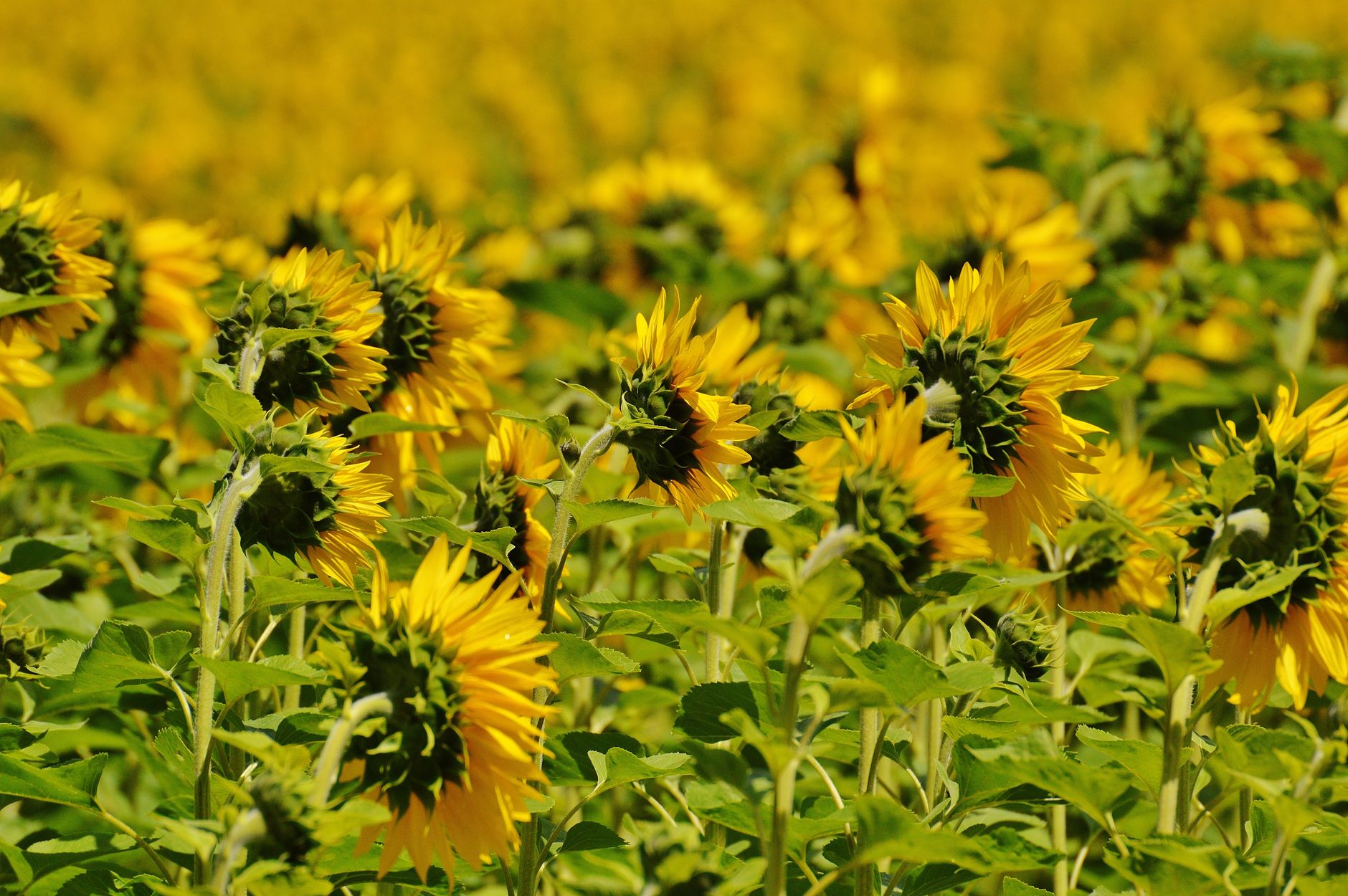
If you have ever watched a sunflower crop fail in the final weeks before harvest, you know that timing is everything in this business. A well-managed sunflower field in Kenya can produce between 1,200 and 2,000 kilograms per acre, but only when each stage gets the right attention at the right moment. This guide walks you through the full growing calendar, from land preparation through delivery, so you can plan each season with confidence.
Understanding Kenya's Sunflower Growing Seasons
Kenya's sunflower calendar revolves around two main planting windows. The long rains season runs roughly from March to June, while the short rains season opens in October and closes around December. Your exact planting date within those windows depends heavily on your county, because rainfall arrival and intensity vary considerably across the regions where farmers work with us.
Altitude and local climate shape the schedule more than most farmers expect. In Bungoma and Busia, which sit at lower elevations in western Kenya, rains tend to arrive earlier and soils warm up faster, which allows planting in mid-March during the long rains season. Tharaka Nithi and Embu farmers, positioned on the slopes of Mount Kenya, often plant a week or two later because cooler temperatures slow soil warming. Narok, which carries a mix of highland and semi-arid conditions, sometimes offers a wider planting window but demands closer attention to dry spells between rains.
Starting at the right time directly controls your disease pressure later in the season. Sunflowers planted too early in cold, wet soils are slow to emerge and sit vulnerable to soil-borne pathogens, particularly Pythium and Rhizoctonia species. Crops planted too late run into dry conditions during grain fill, which is the single most yield-damaging weather event in sunflower production. Getting the timing right is not a small detail; it is the foundation of the entire season's result.
The most reliable trigger for planting is not the calendar date but the actual moisture content of your soil. A simple test is to squeeze a handful of topsoil at planting depth: if it forms a ball without crumbling and leaves moisture on your palm but does not drip, the field is ready. Waiting one extra week for adequate soil moisture consistently outperforms rushing to plant on a date alone. Season after season, the farmers who track soil condition rather than just the calendar tend to achieve more uniform stands.
Pre-Planting: Months Before You Sow
Land preparation should begin six to eight weeks before your target planting date. That lead time allows you to clear crop residues, carry out a primary tillage pass, and let any hard pan or compaction layer break down before secondary tillage. Rushing this work into the two weeks before planting leaves cloddy soils that produce uneven seed-to-soil contact and patchy germination across the field.
Soil testing is a step that many farmers skip, but its value is concrete. A soil test carried out four to six weeks before planting gives you results in time to apply lime if your pH is below 6.0, which is the lower end of the ideal range for sunflowers. It also tells you whether your field is deficient in phosphorus or sulphur, both of which sunflowers need in larger quantities than many other crops grown in the region. Taking a composite sample from at least ten points across the field gives a result that reflects actual field conditions rather than a single patch.
Ordering your certified seeds well in advance prevents one of the most common causes of late planting. Certified sunflower seed supplies can run short in the weeks immediately before the planting window opens, especially during seasons when many farmers in a county are planting at the same time. Placing your seed order at least four weeks before your target planting date ensures you are not scrambling for alternatives at the last minute, which often means settling for uncertified seed of unknown germination rate. If you are farming with us under a contract farming agreement, our county offices coordinate seed delivery to align with your preparation schedule, so this is worth discussing with your area agronomist early.
Water source assessment is a preparation step that pays off during dry spells in the growing season. Even in high-rainfall counties, sunflowers can face a moisture deficit of two to three weeks during a critical growth stage, and having a borehole, river access, or water pan already mapped and functional makes the difference. Assess whether your pump, hose, or drip system is in working order at least a month before planting, not during a drought event mid-season.
Planting to Emergence: The Critical First Month
Optimal soil temperature for sunflower germination sits between 20 and 25 degrees Celsius, and soil moisture at planting depth should be in the range of 60 to 70 percent of field capacity. Below 18 degrees, germination becomes erratic and slow, which extends the window during which seeds are vulnerable to soil fungi and cutworm damage. A basic soil thermometer is an inexpensive investment that removes the guesswork from this decision.
Planting depth and spacing decisions are often treated carelessly, but they carry real consequences. Sunflower seeds perform best at a planting depth of two to three centimeters on heavier clay soils common in parts of Bungoma and Busia, and up to four centimeters on the sandier profiles found in parts of Tharaka Nithi. Spacing of 75 centimeters between rows and 30 centimeters within rows gives a plant population of roughly 44,000 plants per acre, which is the target for most commercial varieties. Planting too shallow in dry conditions leads to failed germination; planting too deep delays emergence and weakens seedling vigor.
Sunflowers typically emerge six to ten days after planting under good moisture and temperature conditions. Begin scouting for poor germination or uneven emergence by day eight, because addressing gaps early in week two is still practical through gapping or re-sowing missed patches. If more than fifteen percent of your planting points show no emergence by day ten, dig a few seeds to determine whether the problem is poor germination, pest feeding, or a moisture issue before deciding on your response.
Pest monitoring in weeks one and two focuses primarily on cutworms and birds. Cutworms feed at the soil surface at night, cutting seedlings cleanly at the base, and a population can wipe out a significant portion of a stand within three or four nights. Birds, particularly doves and weavers in western Kenya counties, will pull seeds directly from the soil or peck at emerging cotyledons. Monitoring every two days during this period and acting quickly with physical deterrents or approved soil dressings keeps early losses contained before they affect your final plant population.
Growth Stage: Months 1.5 to 3 and Spray Schedules
The vegetative growth phase from emergence through to the V8 leaf stage is the window when nitrogen application has the greatest return. Sunflowers take up nitrogen rapidly between the V4 and V8 stages, which typically falls between five and seven weeks after planting. Applying top-dress nitrogen, whether as CAN or urea, before or during this period supports leaf area development that directly drives photosynthetic capacity and ultimately head size. Waiting until the plant is already showing yellowing means the uptake opportunity has already passed.
Disease pressure for powdery mildew and leaf spot typically builds during periods of high humidity combined with cooler temperatures, which in counties like Embu and Narok often corresponds to week six through week ten of the growing season. Powdery mildew appears first as white powdery patches on lower leaves and progresses upward if humidity remains high. A protective fungicide application, using a registered systemic product, is most effective when applied at the first sign of infection rather than after the disease has already colonized the mid-canopy. Consult your county office for the specific fungicide options registered for use with your variety.
Stem borers, aphids, and flower beetles each have distinct peak pressure windows that are worth marking on your calendar. Stem borers tend to peak during weeks six to nine, when larvae bore into the main stem and interrupt water and nutrient flow. Aphid populations build fastest during warm, dry spells in weeks eight through twelve, and heavy infestations on the undersides of leaves reduce photosynthesis and can introduce viral diseases. Monitoring weekly with a fixed scouting route across the field allows you to catch threshold levels before economic damage has already occurred.
Irrigation scheduling during the flowering stage, which falls approximately in months two to two-and-a-half depending on variety and location, is the most critical moisture management decision of the season. A water deficit of even seven to ten days during bud development and open flower stage reduces seed set directly and irreversibly. Wherever supplemental irrigation is available, prioritize this period above any other in the growing calendar. Fields that receive consistent moisture from bud stage through to early grain fill consistently produce heavier heads and higher oil content.
Flowering to Physiological Maturity: Month 3 to 4
Head development begins visibly around week ten to twelve, when the bud swells and opens into the disc flower stage that most people recognize as the sunflower bloom. Pollination happens over a window of roughly five to seven days per head, and bee activity is the primary driver of seed set. Fields with low bee activity during this window consistently show poor seed fill across the head, with gaps of unfilled seeds that reduce both yield and oil content. Where possible, avoid any broad-spectrum insecticide application during open flower stage to protect pollinators already working the crop.
The grain fill stage follows pollination and lasts approximately twenty to thirty days, during which seeds develop from soft and watery to firm and oil-rich. Heat stress above 35 degrees Celsius or drought stress during this period compresses grain fill time and produces lighter seeds with lower oil content. In counties like Busia, where temperatures can peak in March and April, managing soil moisture during this window is particularly important. Rainfall that arrives too late in the season but catches a crop still in grain fill is genuinely valuable, and timing your planting to align this stage with the more reliable moisture periods in your county is part of good planning.
Decisions about final fungicide or pest spray applications should be made by week twelve at the latest. Applying chemicals within thirty days of harvest creates residue concerns that affect produce quality grading at delivery. Most registered fungicide and insecticide products used in sunflower production carry pre-harvest intervals of fourteen to thirty days, so checking the product label and counting backward from your expected harvest date is a non-negotiable step.
Monitoring for harvest readiness involves three clear indicators rather than a single sign. Seed moisture content should be dropping toward twelve to fifteen percent, which you can estimate by pressing a seed between your fingers and checking for firmness without any softness or moisture. The back of the head, meaning the underside of the disc, should turn from green to yellow and then to brown. Head droop, where the heavy, maturing head tilts downward on the stalk, is the final visible cue that physiological maturity is approaching or has been reached.
Harvest and Post-Harvest Timing
The optimal harvest window opens when seed moisture content reaches between ten and twelve percent, which is the range that allows safe storage without significant respiration losses or mold development. Harvesting too early at moisture contents above fifteen percent leads to heating in the store and serious quality deterioration. Harvesting too late leaves the crop exposed to bird damage, which can be heavy in the final two to three weeks after physiological maturity, particularly in western Kenya counties.
Drying schedule depends on the facility available to you. If you are cutting heads manually and threshing by hand or with a stationary thresher, spread seeds thinly on clean tarpaulins in full sun for three to five days, turning twice daily, before testing moisture again with a simple bite test or moisture meter. Seeds destined for direct delivery should not be bagged into sealed sacks unless moisture is confirmed at or below twelve percent, because sealed storage at higher moisture promotes aflatoxin development. If you have access to a grain drier, target an outlet temperature that does not exceed forty degrees Celsius to protect oil quality.
Delivery timing to the market affects both the price you receive and the quality grade assigned to your produce. Fresh-season sunflower, delivered within the first weeks of harvest, typically commands better pricing than produce held in on-farm storage for months, because oil content and free fatty acid levels are most favorable at that stage. Under our contract farming arrangements, we coordinate county delivery schedules to give farmers a clear window and transport support so that produce reaches processing facilities in the best condition possible. Knowing your delivery date before harvest also helps you plan drying and bagging work more precisely.
The period between harvest and the next planting is the right time to plan soil recovery. Sunflowers are heavy feeders, particularly of phosphorus, potassium, and boron, and continuous sunflower cropping on the same land without rotation or organic matter inputs degrades soil health season by season. Rotating with a legume crop such as soybean or groundnuts in the subsequent season restores some nitrogen and improves soil biology before returning to sunflower. Planning this rotation before the next land preparation cycle, rather than deciding at the last minute, is a habit that protects long-term productivity on your farm.
Sticking to a clear timeline across all these stages is genuinely the difference between a season that pays and one that only breaks even. Whether you are farming in Narok, Bungoma, Busia, Tharaka Nithi, Embu, or another county we operate in, the calendar varies in its exact dates but not in its structure. If you want support building a planting plan specific to your location and variety, reach out to your nearest Sunflower Africa county office and we will work through the schedule with you before the next season opens.
See everything Sunflower Africa can do for you.
Visit Sunflower Africa →