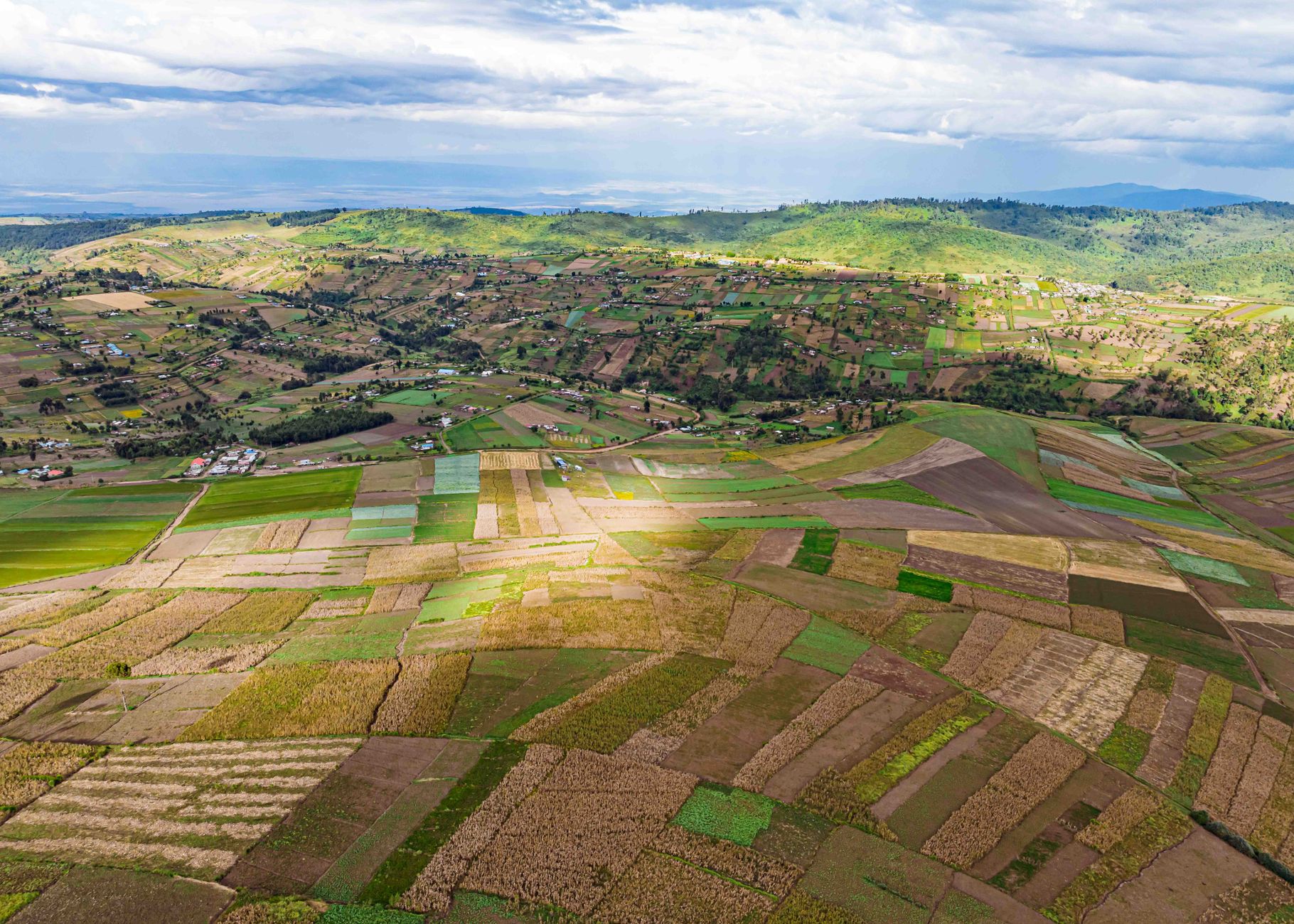
Sunflower Intercropping: Maximize Income on Your Kenya Farm
If you farm sunflowers in Kenya, you already know how much a single good season can mean to your household. Intercropping lets you multiply that impact by growing a companion crop alongside your sunflowers on the same land, in the same season, without doubling your workload. The approach is practical, well-tested in Kenyan conditions, and within reach of any farmer willing to plan carefully before the rains begin.
Why Intercropping Works for Sunflower Farmers
Intercropping is one of the most reliable ways to stretch a single acre further. When you plant sunflowers alongside a second crop, every square metre of your land earns its keep rather than sitting idle under a canopy. You also spread your income across two or more harvests instead of waiting on one payday at the end of the season. That alone changes the financial pressure a farming household carries from planting through to sale.
Crop diversity is also a genuine pest and disease buffer. Many insects and fungal spores rely on finding dense rows of one host plant, and a mixed field breaks that pattern and slows their spread. Farmers who have moved from pure sunflower monocultures to intercropped plots often report lower pest pressure without increasing chemical inputs. The savings in pesticide costs across a season can be meaningful, especially for smallholders managing tight budgets.
Soil health improves significantly when sunflowers share the field with legumes. Legume root systems host bacteria that fix atmospheric nitrogen and release it into the soil where both crops benefit. Over two or three seasons this natural fertility boost reduces how much bagged fertiliser you need to apply. Healthier soil also drains and retains moisture more efficiently, which matters during the unpredictable dry spells common across counties like Tharaka Nithi and Embu.
Finally, intercropping lets you manage smaller, focused plots for each crop rather than stretching attention across separate large fields. Smaller efficient plots are easier to monitor, irrigate, and treat when problems arise. Your labour is more concentrated and better spent, and you rarely need to hire extra hands just to cover the additional ground. The overall cost per kilogram of produce tends to fall even as your total output rises.
Best Crop Combinations for Sunflowers in Kenya
Pairing sunflowers with beans or cowpeas is one of the most popular combinations across Kenya for good reason. Beans and cowpeas fix nitrogen as described above, so they actively improve the soil while the sunflowers grow tall beside them. Both crops also serve different markets: sunflowers go to processors for oil, while legumes sell quickly at local markets or supplement household protein. That split in destination means neither crop competes with the other for buyers at harvest time.
Sunflowers planted alongside maize work particularly well on open, wind-exposed plots in counties like Narok and Bungoma. Sunflowers placed on field borders or between maize rows act as a windbreak, reducing physical damage to maize stems and lowering moisture stress on the root zone. The sunflowers do not significantly shade the maize if spacing is managed correctly, and both crops respond well to the same broad planting window in Kenya's long rains. Many farmers find the combination improves total household food security because maize covers the granary while sunflowers cover the cash income.
Vegetables such as tomatoes and onions can also share the field with sunflowers when managed carefully. These crops exploit different soil depths: sunflower roots go deep while shallow-rooted onions draw nutrients from the top layers, so direct root competition is minimal. Tomatoes benefit from the partial shade that sunflower leaves provide during the hottest afternoon hours, which can reduce blossom drop. You should plan this combination only where you have reliable water access, because vegetables demand more frequent irrigation than either sunflowers or legumes.
Timing is just as important as the crop choice itself. Stagger your planting dates so that the two crops do not reach their most labour-intensive stages at the same moment. If your sunflowers are ready to dehead while your beans need daily picking, you are stretching your labour too thin and quality suffers on both sides. A gap of three to four weeks between the main planting dates often gives each crop the focused attention it needs without your schedule collapsing under the pressure.
Planning Your Layout and Spacing
Sunflower spacing in an intercropped system needs to be generous to prevent unnecessary shading of the companion crop. A row spacing of 60 to 90 centimetres between sunflower plants is a practical starting point for most Kenyan soil types and rainfall zones. Within that spacing you have enough room to establish a row of beans or a line of onions without competition for direct sunlight becoming a problem. Tighter spacing reduces light penetration quickly and is best avoided unless you are using dwarf sunflower varieties.
Border planting is worth serious consideration for farmers dealing with wind or pest pressure at the edges of their fields. Running two or three rows of sunflowers around the perimeter of the plot creates a living fence that slows wind, intercepts some flying insects, and partially screens the inner crop from neighbouring fields where diseases may be present. The inner area can then be dedicated to your companion crop or to a mixed arrangement, depending on your goals. This layout is common on the more exposed plots in Narok and works equally well in the broader plains areas of Busia.
Water access planning must happen before you plant, not after the dry spell begins. Map your field against your water source and confirm that your irrigation method, whether furrow, drip, or sprinkler, can reach both crop types reliably. Sunflowers are relatively drought-tolerant at maturity but need consistent moisture during head development, while vegetables and legumes may need water at entirely different growth stages. Designing your plot with water distribution in mind prevents you from sacrificing one crop to save the other mid-season.
Row width also needs to account for the tools or machinery you use. Hand-weeding a tangled intercropped plot is exhausting and time-consuming when the rows are too narrow for even a jembe to pass cleanly. If you use a tractor or ox plough, leave even wider clearance so you do not damage plant roots on either side. Getting the row dimensions right at layout stage takes fifteen minutes of planning and saves many hours of difficult manual work through the rest of the season.
Managing Pests and Diseases in Mixed Plantings
One of the practical advantages of intercropping is the way it naturally disrupts pest behaviour. Many common pests, including aphids, whiteflies, and certain caterpillar species, navigate fields by detecting the scent or visual pattern of a single target plant in large numbers. A mixed planting breaks that signal and forces insects to work harder to locate their host, which slows infestation rates. Farmers in Bungoma and Busia who have shifted to mixed plots have noted this effect particularly during the onset of the long rains when pest pressure is traditionally high.
Regular monitoring remains essential even when intercropping is already reducing overall pest levels. Walk your field at least twice a week during the first six weeks after germination and look at both crop types carefully, not just the sunflowers. Disease rarely announces itself loudly in the early stages, and catching a fungal outbreak or viral symptom on your beans before it spreads saves you the cost of a full treatment round. Early action is almost always cheaper and more effective than a response applied after the problem has moved across the plot.
Starting with certified, disease-free planting material is the foundation of any effective pest and disease strategy. When you source your sunflower seeds from Sunflower Africa, you receive seeds that have been tested and certified to meet quality standards, meaning you are not introducing pathogens or weak genetics from the first day of planting. Healthy, vigorous plants resist stress better and recover from early pest damage more completely than plants that started from poor seed stock. That initial investment in quality seed pays back several times over by the time you reach harvest.
Crop rotation is the longer-term tool that holds a good intercropping system together across multiple seasons. Plan which crops will occupy which section of your land in the following season before the current one ends. Moving sunflowers to a plot that previously held legumes means the sunflowers benefit from residual nitrogen, and the legumes move to ground that sunflowers have opened up through their deep root channels. This rotation also denies soil-dwelling pests and fungal spores the continuous host material they need to build up to damaging population levels.
Guaranteeing Market Success with Diversified Harvests
Sunflower Africa's contract farming agreements give you a confirmed buyer and a fair price for your sunflower produce before you even prepare your seedbed. That guaranteed market removes one of the biggest uncertainties a Kenyan farmer faces and lets you focus energy on growing well rather than scrambling for buyers at harvest. Your companion crops, whether beans, maize, or vegetables, can then target local markets, traders, or household use without any pressure to find a processor. The two income streams sit alongside each other without competition, which is exactly how a diversified farm should operate.
Staggered harvests also mean your household income arrives in several instalments rather than one large amount that must stretch across the whole year. Beans and cowpeas typically mature in 60 to 90 days, while sunflowers reach harvest between 90 and 120 days depending on the variety, so the two payments land at different moments. That spread is valuable for managing school fees, input purchases for the next season, and household costs without relying entirely on credit between harvests. A farm that generates income across several months is a more stable farm regardless of how good any single crop performs.
Risk reduction is one of the most practical benefits of the whole intercropping approach. If rainfall fails at a critical moment for your sunflowers, your beans or maize may still produce a reasonable yield because they respond differently to the same weather event. The reverse is equally true: a pest outbreak that hits your maize hard may leave your sunflowers largely untouched. No system eliminates agricultural risk entirely, but spreading that risk across two or more crops changes the worst-case outcome from a total loss to a partial setback you can recover from.
Our county teams in Narok, Bungoma, Busia, Tharaka Nithi, and Embu understand the specific conditions in their regions and can help you choose companion crops that match local rainfall patterns and market demand. A crop combination that sells well near Busia market may not move as quickly in Tharaka Nithi, and planting dates that work for the Narok highland belt differ from those suited to the lower-altitude areas around Embu. Speaking directly with your local Sunflower Africa agronomist before you plant means your intercropping plan is built on real local knowledge rather than general advice.
Getting Started This Season
The first practical step is to visit your nearest Sunflower Africa office and talk through your specific plot, your water access, and the companion crops you are considering. Our agronomists can help you choose the right certified sunflower variety for your county and advise on whether a border planting layout or a fully intercropped arrangement suits your field shape better. Coming in before the rains begin gives you time to prepare your seedbed, arrange your seeds, and map your spacing without rushing. If you are unsure which office covers your area, check our contact page for the full list.
Starting small is a sensible strategy for any farmer who is new to intercropping. Try the approach on one quarter of your total land this season and run your usual sunflower monoculture on the rest so you have a direct comparison. At the end of the season you can look at your records and decide whether the intercropped section produced better or worse results for the time and inputs you invested. Most farmers who start small and record their results carefully are confident enough to scale up in the following season because the data from their own field is the most convincing evidence available.
Record-keeping is the tool that turns a single good season into a repeatable system. Write down your planting dates, the spacing you used, how much seed and fertiliser you applied, and your final yields for both crops. Simple handwritten notes in a notebook are enough; you do not need specialist software or expensive equipment. Those records let you adjust your approach with precision each season rather than repeating the same experiment from scratch every year.
Sunflower Africa's capacity building sessions are available to registered farmers across our network counties and cover topics including pest management, soil health, and harvest handling. Attending even one session before your first intercropped season gives you practical techniques specific to your county's conditions rather than generic advice. You also meet other farmers in your area who are working through the same decisions, and the peer learning that happens in those sessions is often as valuable as the formal content. To find out when the next session is scheduled in your county, reach out to your local office or ask at the seed collection point.
Intercropping is not a shortcut or a guarantee of effortless returns. It rewards farmers who plan carefully, observe their fields consistently, and adjust based on what they actually see happening in the soil and the canopy. Sunflower Africa exists to walk alongside you through that process, from certified seed supply through to the moment you deliver your sunflower harvest and receive a fair, agreed price. Start with one good plan, execute it carefully this season, and let the results guide every season that follows.